BY FEEL
Gritty, smooth, sticky
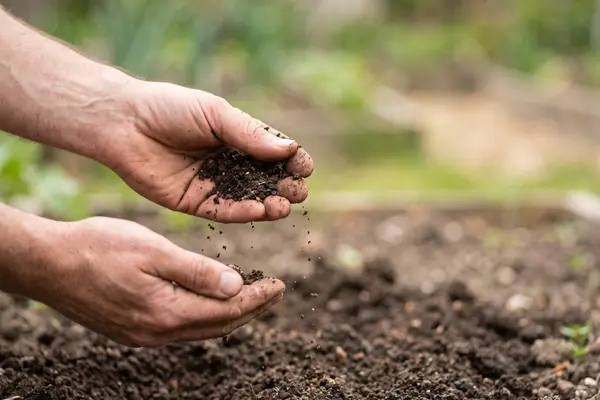
Moisten a pinch and rub it. Colorado State University Extension sums it up: sand feels gritty, silt feels smooth and clay feels sticky.
Try the ribbon test doodlefine
GRAIN SIZE, IN PLAIN ENGLISH
Rub a pinch of damp soil between your fingers.
Test a pinch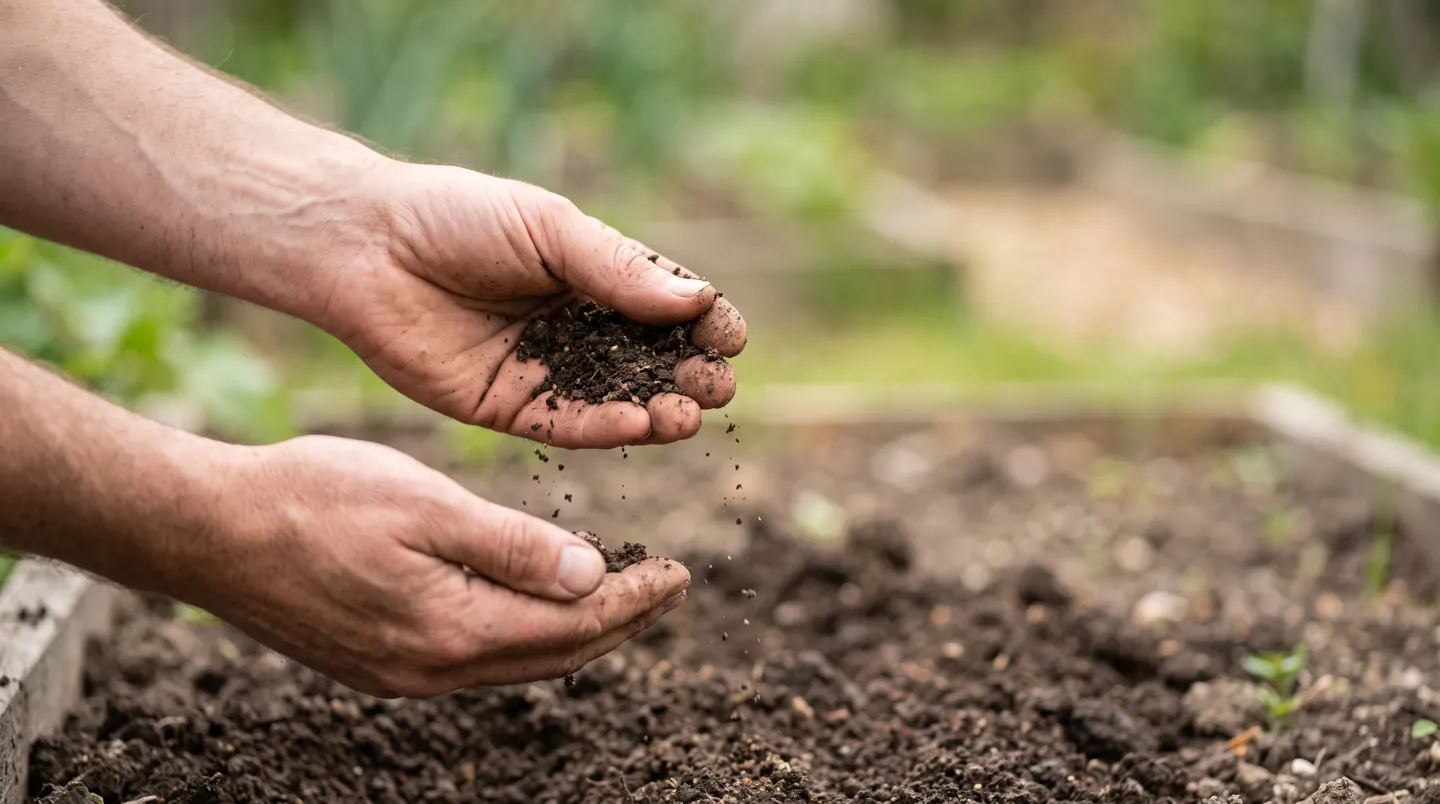
GRITTY, SMOOTHor sticky?
Gritty, smooth or sticky: that feeling is grain size at work. Sand, silt and clay are defined by how big their particles are, and the finest of them, clay, shapes how a soil drains, warms and works.
At a glance
≈ 20%
Clay needed to act clayey
Colorado State University Extension notes that a soil with as little as 20% clay behaves as a clayey soil, even with 80% sand. RHS classes clay soils as those with over 25 percent clay.
CLAY · CSU EXTENSION
2× wider
Each size class versus the one below
On the Udden-Wentworth scale used by geologists, the diameter limits of each subcategory are twice as large as the one beneath it, from clay up to boulders.
SIZE STEPS · WENTWORTH
TWO NUMBERS WORTH KNOWING
One figure on how clay dominates a soil,
one on how geologists step through sizes.
Where clay starts depends on the scale: soil guides such as RHS use 0.002 mm, while the USGS, following Wentworth (1922), puts the clay boundary at 4 µm (0.004 mm).
THE RIBBON TEST
Knead a little moist soil into a putty-like ball, then push it out between thumb and finger into a flat ribbon until it breaks under its own weight. Pick what happened. The bar shows how clay-like the soil behaves.
A quick field guide, not a lab test. Texture names follow the USDA texture triangle used by the source.
THE SHORT ANSWER
Sand, silt and clay are size classes, not materials.
The finest grains have the biggest say.
BY FEEL
Moisten a pinch and rub it. Colorado State University Extension sums it up: sand feels gritty, silt feels smooth and clay feels sticky.
Try the ribbon testIN A JAR
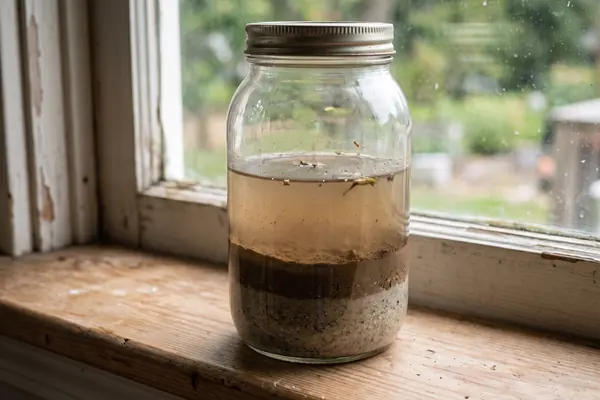
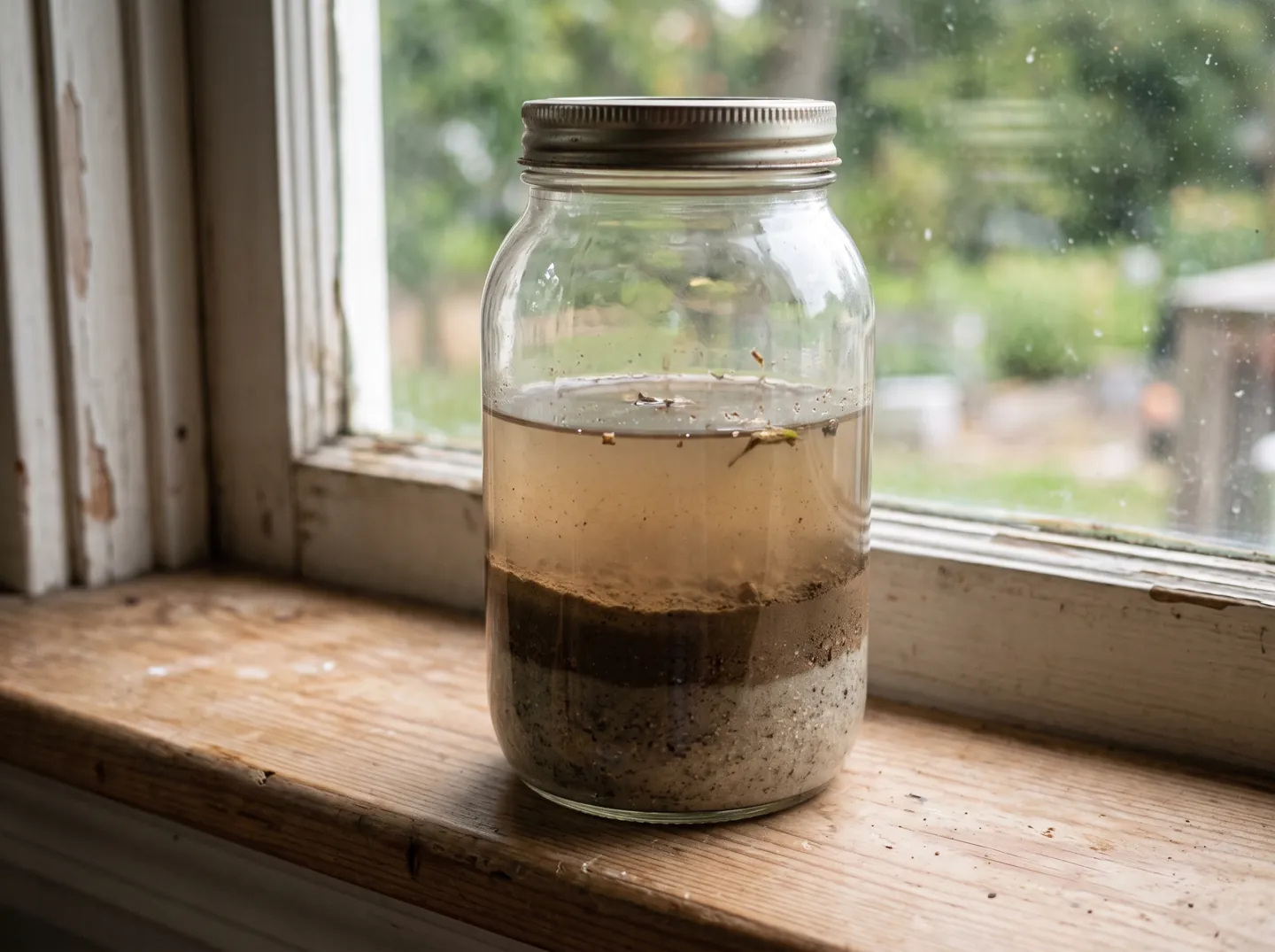
Shake soil with water and the grains sort themselves: sand drops in about a minute, silt within about two hours, and clay can take days.
How to do itBY SIZE
Gardeners call clay anything under 0.002 mm. Geologists use the Wentworth scale, where each size class is twice the one below.
See the numbers
THE JAR TEST
This is the settling test described by Colorado State University Extension. You need a tall, slender jar with a lid, some dry soil and a ruler.
Spread it out to dry, pick out stones and roots, and crush the lumps finely.
Fill the jar a quarter with soil, add water to three-quarters, add a teaspoon of powdered non-foaming dishwasher detergent and shake hard for 10 to 15 minutes.
Mark the sand depth after 1 minute and the silt after 2 hours. Mark the clay once the water clears, typically 1 to 3 days.
Divide each layer's thickness by the total to get the percentage of sand, silt and clay, then look the mix up on a soil texture triangle.
WHY FINE GRAINS MATTER
RHS explains that tiny clay particles have a huge surface area for their volume, so they dominate a soil. Clay soils hold nutrients and water, drain slowly, warm up late in spring and bake hard in summer.
Sandy soils are the opposite: light, quick-draining and easy to dig, but they dry out fast and lose nutrients to rain. Silt sits between, fertile but easily compacted. Loams mix all three and avoid the extremes.
Questions
In soil guides such as RHS, clay particles are less than 0.002 mm across, silt is 0.002 to 0.05 mm and sand is 0.05 to 2 mm. Anything bigger than 2 mm counts as stones.
Geologists use the Udden-Wentworth scale, where sand runs from 2 mm down to about 0.063 mm. The USGS puts the clay boundary at 4 µm, so the classes overlap but do not match soil science exactly.
Silt feels smooth or floury and, RHS says, slightly soapy, and does not clump easily. Clay is sticky when wet, smears, and can be rolled into a long thin sausage.
Loam is a mixture of clay, sand and silt. RHS says loams avoid the extremes of clay or sandy soils and are fertile, well drained and easily worked.
RHS suggests dropping a little soil into a jar of vinegar. If it froths, it contains free calcium carbonate (chalk) or limestone and is lime rich.
Sources
ABOUT THIS NAME
doodlefine.com is part of the DoodleSale portfolio. It isn't in an auction right now, but you can ask about leasing it.